
AB291A Fabric Clustering System Support Guide (12-port Switch), April 2004
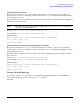

Table Of Contents
- About This Document
- 1 Introduction to Technology
- 2 Hardware Overview
- 3 Installation Planning
- 4 Installing HP Fabric Clustering System
- 5 Administration and Management
- HP-UX Host Administration and Management
- Switch Administration and Management
- CLI Overview
- Using the CLI
- Advanced Switch Setup
- Configuration, Image, and Log Files
- Configuration, Image, and Log File Overview
- File Management
- Listing Configuration, Image, and Log Files
- Viewing Configuration Files
- Viewing Log Files
- Saving Configuration Files
- Saving for System Reboot
- Saving the Backup Configuration
- Specifying the Configuration to Use at
- Saving and Copying Files
- Downloading Files to the System
- Deleting Configuration, Image, and Log Files
- Managing Log Files
- Understanding the Log Format
- Uploading Log Files
- Administering the System
- 6 Monitoring and Troubleshooting
- A Specifications
- B HP 12-Port 4X Fabric Copper Switch Commands
- Show Commands
- show arp ethernet
- show arp IB
- show authentication
- show backplane
- show boot-config
- show card
- show card-inventory
- show clock
- show config
- show fan
- show host
- show ib
- show ib sm configuration
- show ib sm multicast
- show ib sm neighbor
- show ib sm node subnet-prefix
- show ib sm partition
- show ib sm port
- show ib sm service
- show ib sm switch
- show ib-agent channel-adapter
- show ib-agent summary
- show ib-agent switch
- show ib-agent switch linear-frd-info
- show ib-agent switch all mcast-info lid
- show ib-agent switch all node-info
- show ib-agent switch all pkey-info
- show ib-agent switch port-info
- show ib-agent switch sl-vl-map
- show ib-agent switch switch-info
- show interface ib
- show interface ib sm
- show interface ib sm statistics
- show interface mgmt-ethernet
- show interface mgmt-ib
- show interface mgmt-serial
- show ip
- show location
- show logging
- show ntp
- show power-supply
- show running-status
- show sensor
- show snmp
- show system-services
- show terminal
- show trace
- show user
- show version
- IP Commands
- HP Fabric Clustering System Commands
- Administrative Commands
- action
- boot-config
- broadcast
- card
- clock
- configure
- copy
- delete
- dir
- disable
- enable
- exec
- exit
- ftp-server enable
- gateway
- help
- history
- hostname
- install
- interface
- interface mgmt-ethernet
- interface mgmt-ib
- ip
- location
- login
- logging
- logout
- more
- ntp
- ping
- radius-server
- reload
- shutdown
- snmp-server
- telnet
- terminal length
- terminal time-out
- trace
- type
- username
- who
- write
- Show Commands
- C How to Use Windows HyperTerminal
- Glossary
Chapter 5
Administration and Management
Switch Administration and Management
60
Starting A CLI Session
The CLI login prompt is automatically displayed in a terminal window when you connect the serial port of a
computer to the Serial-Console port. It is also displayed when you Telnet or SSH to a configured Ethernet
Management port. Log in as the user with the appropriate permissions for what you wish to do. The user
account you use determines your level of access. super, admin, and guest are the default user accounts.
In addition to the default user accounts described above, there are administrative “roles” that may be
assigned to individual user accounts. Roles allow granular levels of privileges. For example, you can create
separate HP Fabric Clustering System administrators, who only have access to specific subsystems. The
system combines multiple roles with read and read-write access for flexible control.
The unrestricted administrator (super) is responsible for assigning these roles. Network administrators are
given read-only and read-write access to each of the three network types. The different roles are:
For information about configuring user accounts and roles, refer to “Creating User Accounts” on page 90.
NOTE The CLI is case-sensitive. Be sure to enter all text in the case shown.
At the CLI prompt, enter the appropriate user name and password at the CLI prompt to log in as the
admin user. For example,
Login: super
Password: xxxxx
HP-IB>
You are logged in as an administrator and are ready to view and configure the CLI configuration.
NOTE Up to three concurrent CLI sessions are allowed at a time.
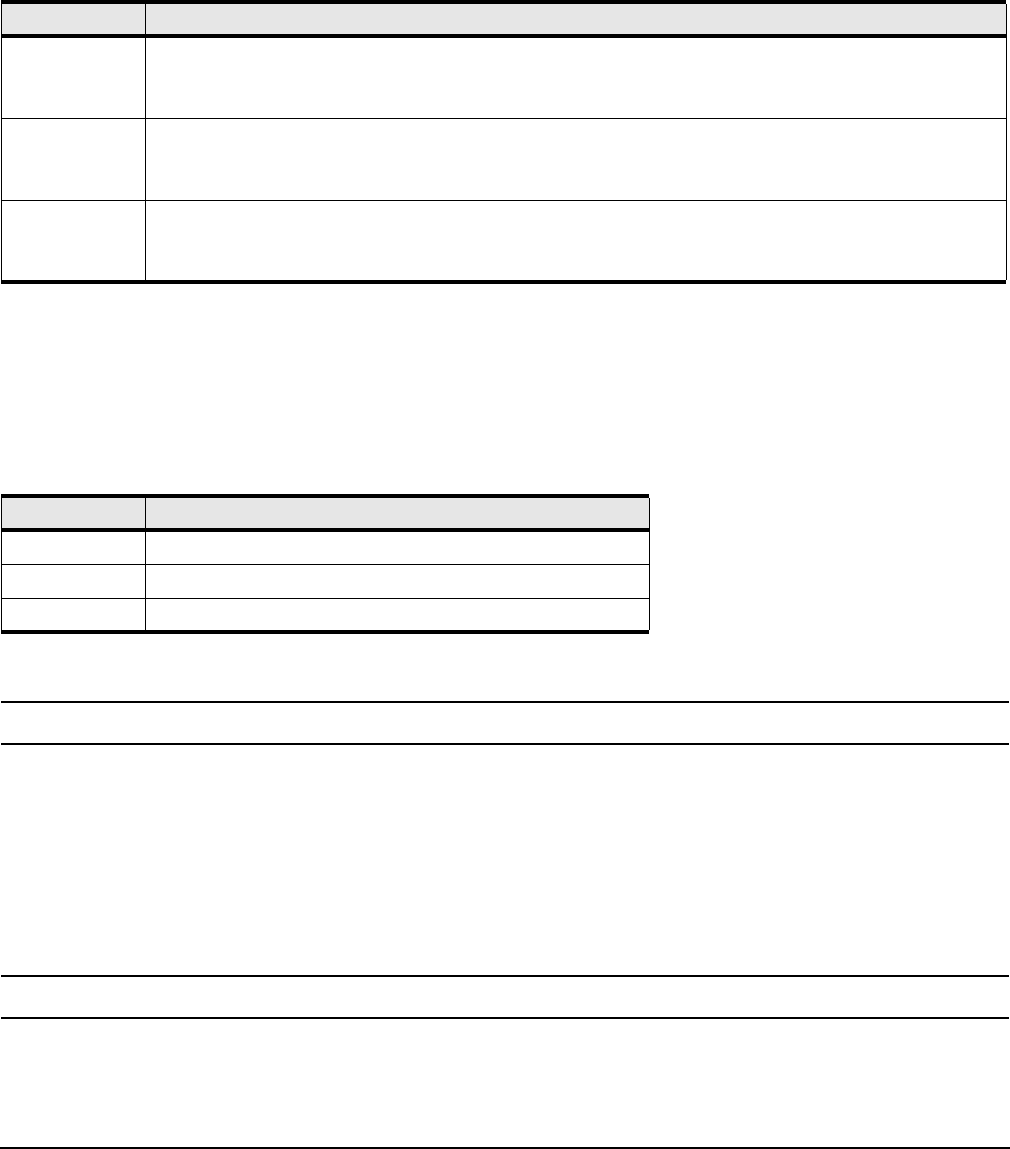
Table 5-2 Privilege Level
User Log-in Privileges
super The super user has unrestricted privileges. Use this account for initial configuration. This user may view
and modify a configuration, as well as administer user accounts and access privileges. This user configures
the console and management ports for initial chassis setup. The default password is super.
admin The admin user has general read-write privileges. This user may view and modify the current
configuration. However, the admin user can change only its own user information, such as the admin
password. The default password is admin.
guest The guest user has read-only privileges. This user may only view the current configuration. The guest user
cannot make any changes during the CLI session. This user is disabled by default. The default password is
guest.
Table 5-3 Roles
Role Description
ib-ro InfiniBand read-only access.
ib-rw InfiniBand read-write access.
unrestricted-rw Read-write access to all network configuration commands.