
AB291A Fabric Clustering System Support Guide (12-port Switch), April 2004
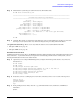
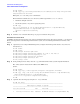
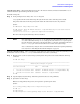
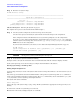
Table Of Contents
- About This Document
- 1 Introduction to Technology
- 2 Hardware Overview
- 3 Installation Planning
- 4 Installing HP Fabric Clustering System
- 5 Administration and Management
- HP-UX Host Administration and Management
- Switch Administration and Management
- CLI Overview
- Using the CLI
- Advanced Switch Setup
- Configuration, Image, and Log Files
- Configuration, Image, and Log File Overview
- File Management
- Listing Configuration, Image, and Log Files
- Viewing Configuration Files
- Viewing Log Files
- Saving Configuration Files
- Saving for System Reboot
- Saving the Backup Configuration
- Specifying the Configuration to Use at
- Saving and Copying Files
- Downloading Files to the System
- Deleting Configuration, Image, and Log Files
- Managing Log Files
- Understanding the Log Format
- Uploading Log Files
- Administering the System
- 6 Monitoring and Troubleshooting
- A Specifications
- B HP 12-Port 4X Fabric Copper Switch Commands
- Show Commands
- show arp ethernet
- show arp IB
- show authentication
- show backplane
- show boot-config
- show card
- show card-inventory
- show clock
- show config
- show fan
- show host
- show ib
- show ib sm configuration
- show ib sm multicast
- show ib sm neighbor
- show ib sm node subnet-prefix
- show ib sm partition
- show ib sm port
- show ib sm service
- show ib sm switch
- show ib-agent channel-adapter
- show ib-agent summary
- show ib-agent switch
- show ib-agent switch linear-frd-info
- show ib-agent switch all mcast-info lid
- show ib-agent switch all node-info
- show ib-agent switch all pkey-info
- show ib-agent switch port-info
- show ib-agent switch sl-vl-map
- show ib-agent switch switch-info
- show interface ib
- show interface ib sm
- show interface ib sm statistics
- show interface mgmt-ethernet
- show interface mgmt-ib
- show interface mgmt-serial
- show ip
- show location
- show logging
- show ntp
- show power-supply
- show running-status
- show sensor
- show snmp
- show system-services
- show terminal
- show trace
- show user
- show version
- IP Commands
- HP Fabric Clustering System Commands
- Administrative Commands
- action
- boot-config
- broadcast
- card
- clock
- configure
- copy
- delete
- dir
- disable
- enable
- exec
- exit
- ftp-server enable
- gateway
- help
- history
- hostname
- install
- interface
- interface mgmt-ethernet
- interface mgmt-ib
- ip
- location
- login
- logging
- logout
- more
- ntp
- ping
- radius-server
- reload
- shutdown
- snmp-server
- telnet
- terminal length
- terminal time-out
- trace
- type
- username
- who
- write
- Show Commands
- C How to Use Windows HyperTerminal
- Glossary

Chapter 5
Administration and Management
Switch Administration and Management
78
Step 4.
Show the new system -image.
HP-IB# show boot-config
================================================================================
System Boot Configuration
================================================================================
slot-id : 1
sw-version : Release-1.1.3hp/build025
last-image-source : Release-1.1.3hp/build025
primary-image-source : Release-1.1.3hp/build025
6. Reboot the System “Rebooting the System” on page 97
The complete reboot process is also described in the Admin chapter ().
Step 1. Once the system is configured to use the new image, reboot the system.
Once the reboot process is initiated, the system checks for unsaved changes to the configuration.
If the configuration has been modified but not saved, you will be prompted to save the configuration.
If you enter yes, the changes made during the current CLI session are saved to startup-config and used
when the system comes back up. You can also use the copy running-config startup-config command in
EXEC mode to save the configuration.
If you have dual-controllers in your chassis, see also “Reboot the System Through the CLI” on page 98.
HP-IB# reload
System configuration is modified. Save? [yes(default) | no | filename] yes
Proceed with reload? [yes(default) | no]
CAUTION Do not power cycle the system during the reboot process.
Step 2. Verify that the system has finished initializing.
Attempt to telnet to the system and enter the show card command. Wait until the card status displays “normal”.
As the system powers-up, it uses the new image to configure internal hardware and software.
Deleting System Images and Image Files
Deleting Images Through the CLI
Up to two image files may be saved on the system. Older versions of image files will have to be removed before you can
add more.
You cannot copy or install more than the maximum number of image files or system-images. The delete command is
used to remove installed system-images and image files. The delete command may also be used with the syslog and
config keywords to remove system log and configuration files.
The syntax of the delete command is
delete image:file
Image is the type of file system (image, syslog, config). The file-system must be appropriate for the type of file you are
deleting.
file is the name of the file or system-image to be removed.
Enter the file name exactly as displayed by the dir command.