
Technical data





Virtual Partitions (vPars) Management on nPartitions
Creating a New vPar
HP System Partitions Guide: Administration for nPartitions, rev 5.1
477
To further modify the vPar, issue the vparmodify command after
vparcreate has created the new vPar.
For other details on creating and configuring vPars see the section
Configuring vPar Resources and Attributes on page 447.
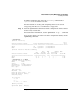
Step 4. Issue the vparstatus command to list the configuration and boot status
for the newly created vPar.
For detailed vPar information, use the vparstatus -v -p... command.
If you need to change any of the new vPar’s configuration details, use the
vparmodify command.
# vparstatus
[Virtual Partition]
Boot
Virtual Partition Name State Attributes Kernel Path Opts
============================== ===== ========== ========================= =====
Shad Up Dyn,Manl /stand/vmunix
Mesh Down Dyn,Manl /stand/vmunix
[Virtual Partition Resource Summary]
CPU Num Memory (MB)
CPU Bound/ IO # Ranges/
Virtual Partition Name Min/Max Unbound devs Total MB Total MB
============================== ================ ==== ====================
Shad 2/ 8 2 2 7 0/ 0 2048
Mesh 1/ 16 1 0 3 0/ 0 2048
# vparstatus -v -p Mesh
[Virtual Partition Details]
Name: Mesh
State: Down
Attributes: Dynamic,Manual
Kernel Path: /stand/vmunix
Boot Opts:
[CPU Details]
Min/Max: 1/16
Bound by User [Path]: 2.10
Bound by Monitor [Path]:
Unbound [Path]:
[IO Details]
2.0.14
2.0.0
2.0.14.0.0.6 BOOT
[Memory Details]
Specified [Base /Range]: