
Installation Guide
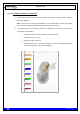


Table Of Contents
- 1. INTRODUCTION
- 2. UNPACKING AND CHECKING
- 3. PREVIOUS CONSIDERATIONS
- 4. INFORMATION ON SAFETY AND ELECTROMAGNETIC COMPATIBILITY
- 4.1 GENERAL CONSIDERATIONS ABOUT SAFETY
- 4.2 OPERATION AND EXPOSURE TO RF ENERGY
- 4.3 IMPORTANT SAFETY NOTES ABOUT THE ANTENNA
- 4.4 ELECTROMAGNETIC COMPATIBILITY REGULATORY INFORMATION (FCC AND ISED)
- 4.5 UL / SAFETY CERTIFICATIONS
- 4.6 EMC, SAFETY AND RF EXPOSURE STANDARDS
- 4.7 MECHANICAL AND ENVIRONMENTAL STANDARDS
- 5. EQUIPMENT DESCRIPTION
- 6. INSTALLATION GUIDE
- 6.1 NECESSARY EQUIPMENT
- 6.2 BASIC PRE-CONFIGURATION
- 6.3 INSTALLATION
- 6.3.1 MAST/POLE INSTALLATION
- 6.3.2 WALL INSTALLATION
- 6.3.3 PBS ACCESSORY INSTALLATION
- 6.3.4 ANTI-VANDAL KIT INSTALLATION
- 6.3.5 REQUIREMENTS TO CONSIDER DURING THE ANTENNA INSTALLATION
- 6.3.6 CONNECTIONS
- 6.3.6.1 SUPPORTED CONFIGURATIONS
- 6.3.6.1.1 ONE MBS UNIT WITH DIVERSITY 1 IN RECEPTION
- 6.3.6.1.2 ONE MBS UNIT WITH DIVERSITY 2 IN RECEPTION
- 6.3.6.1.3 TWO MBS UNIT (SAME SUBBAND) WITH DIVERSITY 1 OR 2 IN RECEPTION
- 6.3.6.1.4 TWO MBS UNITS (DIFFERENT SUBBANDS) WITH DIVERSITY 1 IN RECEPTION
- 6.3.6.1.5 TWO MBS UNITS (DIFFERENT SUBBANDS) WITH DIVERSITY 2 IN RECEPTION
- 6.3.6.2 CONNECTION OF THE EXTERNAL POWER SUPPLY
- 6.3.6.3 ANTENNA CONNECTION
- 6.3.6.4 EXTERNAL ETHERNET CONNECTION
- 6.3.6.1 SUPPORTED CONFIGURATIONS
- 6.3.7 CONNECTING / DISCONNECTING THE MBS AC MAINS SUPPLY
- 6.3.8 CONNECTING / DISCONNECTING THE MBS FROM THE DC SUPPLY
- 7. START UP/CONFIGURATION/VERIFICATION
- 8. INCIDENTS

TETRA MBS UNIT. INSTALLATION GUIDE
F067646PT_2801
Page 62 of 62
en
8.2 OVER VOLTAGE PROTECTION
MBS Unit has several protections against lightning and surges, in any case the action of these
protections generate an alarm in the NMS client which disappear when the protective element is replaced by
authorized technical staff.
Protection against lightning and power surges
This protection is located within the MBS Unit. It should be changed every time it breaks
even if the MBS Unit continues functioning properly. An alarm in the NMS Client is reported
showing that the replacement of this type of protection is needed.
Protection against lightning and surges in the RF connections
RF surge protection consists of replaceable Gas Discharge Tubes (GDT) located into the RF
connectors located in the bottom of the MBS. Without GDT no protection is provided and
VSWR performance is degraded.
The GTD is removable, making easy and quick replacing if it is damaged. The replacing
intervals depend mainly upon the number and the strength of the lightning impacts but as a
general rule, must be changed after that a lightning has destroyed some elements ahead
(e.g. antenna). That is why the GTD rarely must be replaced in most use cases and life
expectancy can be up to 20 years.
GDT is connected in parallel between the central conductor and the external shield. During
an overvoltage (lightning), the tube is practically shorted and avoids overvoltage input into
the MBS. When the overvoltage disappears, GTD returns to its original condition of high
insulation and is ready to operate again.
While GTD is triggered (during lightning), the MBS may appear alarmed in the NMS client
software (alarm monitoring of the system).