
User guide

Electrical Characteristics (Continued)
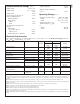
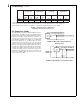
Note 10: Regulation is measured at constant junction temperature, using pulse testing with a low duty cycle. Changes in output due to heating effects can be
computed by multiplying the internal dissipation by the thermal resistance.
Note 11: For best long-term stability, any precision circuit will give best results if the unit is aged at a warm temperature, and/or temperature cycled for at least 46
hours before long-term life test begins. This is especially true when a small (Surface-Mount) part is wave-soldered; allow time for stress relaxation to occur. The
majority of the drift will occur in the first 1000 hours at elevated temperatures. The drift after 1000 hours will not continue at the first 1000 hour rate.
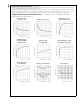
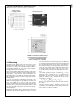
Typical Performance Characteristics To generate these curves the LM60 was mounted to a
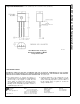
printed circuit board as shown in
Figure 2
.
Thermal Resistance
Junction to Air Thermal Time Constant
Thermal Response in
Still Air with Heat Sink
01268103 01268104 01268105
Thermal Response
in Stirred Oil Bath
with Heat Sink
Start-Up Voltage
vs. Temperature
Thermal Response in Still
Air without a Heat Sink
01268106
01268107 01268108
Quiescent Current
vs. Temperature Accuracy vs Temperature Noise Voltage
01268109 01268110
01268111
LM60
www.national.com 4