
User guide


10
produced by switches and adjustments. Its small size and matte black chrome finish
create a minimum disturbance of the visual field, especially important where the
microphone must not obstruct the view of an audience or of a motion picture or TV
camera.
The SF-12 is easy to use, robust and reliable. Neither temperature nor humidity affects it.
SF-12 has numerous applications. Along with its useful-ness as an overhead drum mic, a
stereo acoustic piano or guitar mic, and organ recording, it can be applied to motion
pictures because of its natural stereo capabilities. It is also very useful for recording
ensembles such as big bands, orchestras and jazz groups.
Because of the coincident crossed figure-8 pattern of this product, it is eminently suitable
for M-S (mid-side) recording. Once a recording has been completed using the proper
orientation, the soundfield can be adjusted from pure monophonic on one hand to “super
wide” stereo on the other.
Although spaced microphones can produce some of these results, such recordings can
suffer from “comb filter” effects -peaks and dips in the frequency response as the
soundfield is adjusted. When the SF-12 is used, however, only the feeling of space
changes. The sonic quality does not. More detailed information on M-S techniques is
presented in the literature supplied with the SF-12, or in manuals accompanying
commercial M-S equipment.
While the SF-12 yields excellent results in the recording or broadcasting of material “on a
grand scale”, its suitability for the recording studio is astounding. To prove the point,
here are three typical examples:
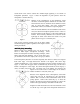
1. Object: to record a vocal with acoustic guitar. Two separate mono
tracks are required with little leakage between the tracks. One stand
and one SF-12 can do the job of two, when the two axes of sensitivity
are correctly oriented.
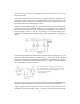
2. Object: to record a drum kit. The wide
bandwidth and superb frequency response of
the SF-12 capture every percussive nuance, and
a touch of EQ can be used, if necessary, to bring out various
elements. Experience has shown that an additional microphone on
the kick drum is often all that is required. Meanwhile, the “dead”
axes can reduce leakage from unwanted sound sources.
3. Object: to record strings accurately. String overdubs fare well
when the SF-12 is used, because of its “wall-to-wall” stereo imaging and uniform, smooth
frequency response.