
User guide
5
stereo or multi channeled microphones, such as the SF-12. Ground loops can develop in
the preamplifier with any stereo microphone, regardless of the type (i.e. condenser,
dynamic, ribbon). A ground loop manifests itself as unwanted noise, buzz or hum
(usually 120 Hz).
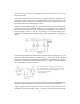
The condition is brought on when the left and right transducer elements are plugged into
two inputs of a stereo or multi-channel preamplifier. The pair of three-pin male XLR
connectors of the stereo microphone cable usually shares Pin-1 as ground, so they are
grounded to each other through the cable set. If the grounding scheme within the
preamplifier is poorly designed, or the distances to internal ground are too great, a ground
loop develops. The problem may be more apparent with ribbon microphones because of
the high gain required for proper operation.
You can perform a simple test to check for this condition (preferably done with a pair of
headphones to avoid feedback). Plug one side of the stereo microphone into either
preamplifier input. Listen to the output of the preamp. All should be quiet except for
the mic signal. Now plug the second side into the next preamplifier input. If a noise or
buzz develops, you have a ground loop. The ground loop may be very slight or more
pronounced, depending on the preamp. Battery powered preamps usually do not exhibit
this problem, and neither do well designed, line operated mic preamps. The simple fix is
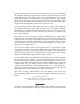
to disconnect one of the microphone’s two Pin-1 ground connections. A better method is
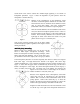
to make a small ground lifter out of a male-female XLR barrel adapter. Switchcraft makes
a very nice one and it takes less than five minutes to wire it up. Simply connect Pin-2 to
Pin-2, Pin-3 to Pin-3, and leave Pin-1 disconnected. Correcting the problem at the
preamplifier would be preferable, but is often more difficult and/or expensive.
In conclusion, try to find the best preamp you can afford that has good gain
characteristics and low noise. Coloration is optional.
Equalization and Ribbon Microphones
One of the great strengths of ribbon microphones is how well they take EQ. Even with
substantial amounts of equalization, ribbons retain their natural, “real” quality. For
example, when a lead vocal is being performed on a ribbon microphone, you can actually
boost the upper end frequencies to the point where the ribbon mic emulates the
performance curve of a condenser mic with excellent result. This is not to say that a
ribbon microphone can replace a quality condenser mic, but the EQ friendliness
inherent in ribbon microphones does allow for an enormous amount of flexibility.
The reason that ribbon mics take EQ so well is because of their inherent low self-noise
(less than 15 dB) and unusually smooth response characteristics. Dialing in high amounts
of equalization on condenser or dynamic microphones also means dialing in extra amounts
of the microphone’s distortion products and self noise; garbage that contributes to an
unnatural, unpleasant sound. Because distortion and self-noise are almost non-existent in
ribbon microphones, high levels of EQ can be used without adding harshness or excessive
noise.