
User guide
6
Hum Noise and Mic Orientation
All dynamic microphones, including ribbons, utilize powerful magnets in their motor
assemblies and matching transformers, and are, to some degree, susceptible to picking up
stray alternating magnetic fields. Power transformers (such as those found in guitar
amplifiers) and alternating current motors are the most likely sources of radiated noise.
Building wiring and electrical utility transformers are other likely sources. A well-
designed microphone provides shielding to minimize the effects of stray magnetic
radiation. In some cases complete isolation is impossible and the result is usually hum or
buzz. Ribbon microphones can potentially manifest this condition to a greater degree
because of their higher gain requirements. With vintage ribbon microphones, that employ
large bulky magnet structures, the problem can be worse. Royer SF-1 and SF-12
microphones are designed to minimize the effects of unwanted radiation by integrating the
transducer barrel as part of the magnetic return circuit. With this design, the barrel
housing the transducer serves to complete the North-South magnetic return and
neutralizes the effects of outside magnetic radiation. The SF-1 mono and SF-12 stereo
ribbon microphones go one step further by incorporating toroid impedance matching
transformers, which have a natural ability to repel magnetic radiation.
Dynamic and ribbon microphones are passive devices, meaning they incorporate no
external or internal power supplies and have no head amplifier and therefore cannot
produce hum on their own. Unwanted noise (hum) can only come from an external
source. Fortunately, there is a simple procedure that can be used to identify the source of
the noise and eliminate it. Repositioning a dynamic and ribbon microphone is the
number-one way to get rid of unwanted noise. If hum is detected, it means that the
microphone is in the proximity of an alternating magnetic field. While listening (preferably
with headphones) to the mic, move it around. The mic will “find” the noise source quite
easily. If you are miking a guitar amplifier and suspect the amplifier’s power transformer
may be the source of unwanted noise, move the mic around the amp. You will probably
find that the noise is louder as you approach the amplifier’s power supply and quieter
when you move it away. Eliminating the noise can be fairly simple and requires finding
the “null” point of the noise. The “null” point is the position that places the
microphone’s magnetic components away from the lines of radiation. Simply rotating the
microphone slightly is many times all that is required to cancel out the noise. This is
similar to the procedure guitarists use to eliminate noise from single coil guitar pickups.
There will be a “magic position” where the noise disappears completely. Finding the
exact position that also provides acceptable acoustic placement of requires a little
practice, but the results are well worth the time.
RR
RR
ee
ee
cc
cc
oo
oo
rr
rr
dd
dd
ii
ii
nn
nn
gg
gg
TT
TT
ee
ee
cc
cc
hh
hh
nn
nn
ii
ii
qq
qq
uu
uu
ee
ee
ss
ss
CC
CC
oo
oo
nn
nn
vv
vv
ee
ee
nn
nn
tt
tt
ii
ii
oo
oo
nn
nn
aa
aa
ll
ll
((
((
XX
XX
YY
YY
))
))
RR
RR
ee
ee
cc
cc
oo
oo
rr
rr
dd
dd
ii
ii
nn
nn
gg
gg
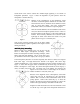
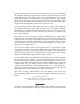
Orientation of the SF-12 microphone is such that the “ROYER” logo should always face
the sound source to avoid inadvertent phase reversals.
When the microphone is aimed as described, the center stage is picked up equally (3dB
down) by both transducers. Their included angle of 90 degrees produces a continuous