
User guide



7
sound curtain with sources outside this included angle appearing to be outside of
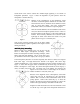
loudspeaker placement. Figure 1 shows the alignment of polar patterns when the
microphone is oriented this way.
Because of the “togetherness” of the transducers, sound
will arrive at both microphone elements at the same time.
This means that the two channels can be summed to mono
with no comb filter effects, and room reverberation
(undesirable in mono) is cancelled to a surprising degree.
Since arrival time differences are not available as aural stereo
cues, how does this microphone produce stereo? It does so
through variations in the intensity of the sound striking the
ribbons. These intensity differences are a function of the
right angle at which sound strikes the ribbon. The polar
pattern shown in Figure 2 will clarify this.
None of this would be possible if the SF-12 didn’t exhibit
excellent frequency response regardless of the angle of sound
striking the ribbons.
MM
MM
ii
ii
dd
dd
ss
ss
ii
ii
dd
dd
ee
ee
((
((
MM
MM
SS
SS
))
))
RR
RR
ee
ee
cc
cc
oo
oo
rr
rr
dd
dd
ii
ii
nn
nn
gg
gg
Based on what you’ve learned so far, you can now use the
SF-12 to make superb stereophonic recordings. What
follows is a description of another recording technique, which
adds a great deal more flexibility. All we can do here is give
you an intuitive feel for this subject, but it can get you started.
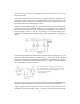
In the microphone placement we showed originally each ribbon is aimed at 45 degrees
from center stage. The angle between the ribbons is 90 degrees, with center stage
“splitting the difference”. Now rotate the microphone 45 degrees counter-clockwise as in
Figure 3. Notice that the upper ribbon is aimed directly at center stage, and the lower
ribbon is 90 degrees to center stage. We call the microphone aimed at center stage by a
variety of names; mid, mono, (M). The other unit in our package, now aimed at 90
degrees to the sound source at center stage can be called a
number of names as well; side, stereo, (S).
Because of the alignment of the S microphone, sound from
center stage will not be reproduced by this microphone
element. This is because of the bi-directional nature of the
pickup pattern. Some of the sound may try to move the
ribbon to the left, but just as much sound will try to move the
ribbon to the right, resulting in cancellation of the sound.
Imagine now that the sound source has moved around so that
it is all the way to the right of the microphone rather than in
Figure 3