
User guide



8
front of it as before. Now the S microphone will respond to the source, but the M
microphone will not.
If the sound source moves to the left of the microphone, again the S microphone will
respond but the M unit will be silent. The important fact to note is that the output of the
S microphone will be 180 degrees out of phase to what it was when the source was at the
right. Please keep this in mind, because it’s crucial.
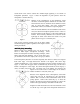
Examine the block diagram of Figure 4a. Note that the outputs of the two microphone
transducers fan out to four separate mixer inputs. For our purposes we will assume that
the top transducer of the SF-12 is the M microphone. Its preamplifier is so wired as to
feed equal signals to both “L” and “R” output busses. Note that if nothing else is
connected, the signal from this preamplifier will produce a monophonic, center channel
signal.
Figure 4a
Notice that the preamplifier associated with the S element feeds two more inputs of your
mixer, but that the phase has been reversed at position 4. The in-phase signal is assigned
to the “left” channel and the reversed phase signal feeds the “right” channel. If only the S
microphone is connected a monophonic signal results, but it will not be centered because
the two channels are not properly phased.
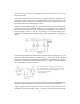
If your preamplifier lacks the ability to invert phase here is a
handy circuit to build an invert phase adapter. The adapter
can be built into a Male/Female Switchcraft barrel, or use a
piece of cable and 2 connectors
—1 male and 1 female.
For a start, set up your system so that the signal from the S setup will produce the same
signal level as the M signal, given the same level with respect to the two transducers.
Suppose we again move our sound source in such a way that it is right in front of the M
microphone. We hear a monophonic signal. No signal is produced by the S microphone