
User guide




Aries Reference Manual Section 1 – Overview
Radio Systems Information Ltd. Page 5
1.2 System Overview
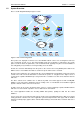
Aries is shown diagrammatically in figure 1 below:
Figure 1: Aries overall configuration
Aries probes are deployed in vehicles across the TETRA network service area ensuring that each base
site is monitored at least once a day and preferably much more frequently for critical base sites. Each
probe records the basic site parameters, such as RSSI and LAC, typically every 60 seconds and initiates a
test call typically every 5 minutes to avoid generating excessive traffic.
Results are sent back immediately from the probe to the central server using GPRS packet data. If the
GPRS service is not available then data is stored in the probe until it can be sent back.
All of the probe parameters are configured by the system administrator and updated over-the-air from the
central server. All over-the-air data both to and from the probes is encrypted for the highest level of
security and a separate TETRA Group is assigned for Aries so that the test calls do not disturb or interfere
with users.
The Aries central server software runs on almost any Web server with support for PHP and MySQL
database. Users may run the application on their existing server or on dedicated server hardware supplied
by RSI or indeed on RSI’s own server if desired.
A single server can be used to provide the Aries service to several completely separate TETRA networks
with users for each network only able to access data for their own network.
The server application handles the incoming GPRS data packets, putting the data into the central
database.
Users log onto the server web page and view the results using a standard web browser with access being
strictly password controlled. The server application generates fully interactive web pages with an intuitive
interface producing maps, graphs, tables and automatic warnings of historical data or real-time data as it is
received.
TETRA
NETWORK
Internet
GPRS
INTERNET
Aries
Server