
User's Manual


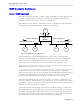
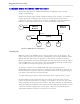
Table Of Contents
- About this User Guide
- Table Of Contents
- Chapter 1– Setting Up And Administering The Switch
- Chapter 2 - Configuring MAC Address Management
- Chapter 3 – Configuring the Ports
- Chapter 4 – Configuring VLANs
- Chapter 5 – Configuring Class of Service
- Chapter 6 – Configuring Rapid Spanning Tree
- Chapter 7 – Configuring Multicast Filtering
- Chapter 8 – Diagnostics
- Chapter 9 – Using Ethernet And RMON Statistics
- Introduction
- View Ethernet Statistics
- View Ethernet Port Statistics
- Remote Monitoring (RMON)
- RMON Historical Statistics Concepts And Issues
- RMON Alarms And Events Concepts And Issues
- The Alarm Process
- Alarm Generation And Hysteresis
- Delta vs. Absolute Values
- Configure RMON Alarms
- Configure RMON Events
- RMON Event Logs
- Troubleshooting
- Chapter 10 - Using The CLI Shell
- Chapter 11 – Upgrading Firmware And Managing Configurations
- Appendix A - Menu Tree
- Appendix B - SNMP MIB Support
- Appendix C – SNMP Trap Summary
- Appendix D – RMON Acceptable MIB Parameters
- Index

RuggedSwitch™ User Guide
IGMP Concepts And Issues
Router IGMP Operation
The following figure provides a simple example of IGMP use. One “producer” IP
host (P1) is generating two IP multicast streams, M1 and M2. There are four
potential “consumers” of these streams, C1 through C4.
The multicast router discovers which host wishes to subscribe to which stream by
sending general membership queries to each of the segments.
Multicast
Router
P1
C1 C2 C3 C4
M1 M2
Membership Query
M1 Membership Report
Membership Query
M2 Membership Report
Figure 42: IGMP Operation Example 1
In this example the general membership query sent to the C1-C2 segment is
answered by membership report indicating the desire to subscribe to stream M2.
The router will forward the M2 stream onto the C1-C2 segment. In a similar
fashion the router discovers that it must forward M1 onto segment C3-C4.
Note:
Membership reports are also referred to as “joins”.
A consumer may join any number of multicast groups, issuing a membership
report for each group. Hosts on the segment note membership reports from other
hosts and will suppress their own reports accordingly. In this way the IGMP
protocol guarantees the segment will issue only one join for each group.
The router periodically queries each of its segments, in order to determine if at
least one consumer still subscribes to a given stream. If no responses occur within
a given timeout period (usually about two query intervals) the router will prune the
multicast stream from the given segment.
A more usual method of pruning occurs when consumers wishing to unsubscribe
issue an IGMP “leave group” message. The router will immediately issue a group-
specific membership query to determine if there are any remaining subscribers of
that group on the segment. After the last consumer of a group has un-subscribed,
the router will prune the multicast stream from the given segment.
RuggedCom