
SDS


Date Printed: 7/18/2022
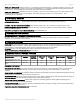
PERSONAL PROTECTION
ENGINEERING CONTROLS: Use process enclosures, local exhaust ventilation, or other engineering controls to control airborne
levels below recommended exposure limits. Prevent build-up of vapors by opening all doors and windows to achieve cross-
ventilation.
RESPIRATORY PROTECTION: A respiratory protection program that meets OSHA 1910.134 and ANSI Z88.2 requirements must be
followed whenever workplace conditions warrant a respirator's use.
SKIN PROTECTION: Use gloves to prevent prolonged skin contact. Nitrile or Neoprene gloves may afford adequate skin protection.
EYE PROTECTION: Use safety eyewear designed to protect against splash of liquids.
OTHER PROTECTIVE EQUIPMENT: Refer to safety supervisor or industrial hygienist for further guidance regarding types of
personal protective equipment and their applications.
HYGIENIC PRACTICES: Wash thoroughly with soap and water before eating, drinking or smoking. Remove contaminated clothing
immediately and launder before reuse.
Engineering Measures for Combustible Dust: No Information
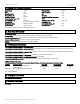
9. Physical and Chemical Properties
Appearance:
Liquid
Physical State:
Liquid
Odor:
Mild N.E.
Odor Threshold:
Specific Gravity:
1.021
pH:
12.5-13.5
Freeze Point, °C:
N.D.
Viscosity:
N.D.
Solubility in Water:
Miscible
Partition Coefficient, n-octanol/
water:
N.D.
Decomposition Temp., °C:
N.D.
Boiling Range, °C:
100 - 537
Explosive Limits, vol%:
N.A. - N.A.
Flammability:
Does not Support Combustion 94
Flash Point, °C:
Evaporation Rate:
Slower than Ether
Auto-Ignition Temp., °C:
N.D.
Vapor Density:
Heavier than Air
Vapor Pressure:
N.D.
(See "Other information" Section for abbreviation legend)
10. Stability and Reactivity
Conditions to Avoid: Avoid excess heat. Keep from freezing.
Incompatibility: Incompatible with strong oxidizing agents, strong acids and strong alkalies.
Hazardous Decomposition: When heated to decomposition, it emits acrid smoke and irritating fumes.
Hazardous Polymerization: Will not occur under normal conditions.
Stability: This product is stable under normal storage conditions.
11. Toxicological Information
EFFECTS OF OVEREXPOSURE - EYE CONTACT: Irritating, and may injure eye tissue if not removed promptly.
EFFECTS OF OVEREXPOSURE - SKIN CONTACT: Low hazard for usual industrial handling or commercial handling by trained
personnel.
EFFECTS OF OVEREXPOSURE - INHALATION: High gas, vapor, mist or dust concentrations may be harmful if inhaled. Avoid
breathing fumes, spray, vapors, or mist.
EFFECTS OF OVEREXPOSURE - INGESTION: Substance may be harmful if swallowed.
EFFECTS OF OVEREXPOSURE - CHRONIC HAZARDS: No Information
PRIMARY ROUTE(S) OF ENTRY: Eye Contact, Ingestion, Inhalation, Skin Absorption, Skin Contact
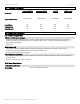
ACUTE TOXICITY VALUES
The acute effects of this product have not been tested. Data on individual components are tabulated below:
CAS-No. Chemical Name Oral LD50 Dermal LD50 Vapor LC50
6834-92-0 Sodium Metasilicate 1153 mg/kg Rat N.E. N.E.
1310-58-3 Potassium Hydroxide 284 mg/kg Rat N.E. N.E.
N.E. - Not Established
Not Yet Specified
Page 3 / 5