
SDS




Date Printed: 11/14/2023
OTHER PROTECTIVE EQUIPMENT: Refer to safety supervisor or industrial hygienist for further guidance regarding types of
personal protective equipment and their applications.
HYGIENIC PRACTICES: Wash thoroughly with soap and water before eating, drinking or smoking. Remove contaminated clothing
immediately and launder before reuse.
Engineering Measures for Combustible Dust: No Information
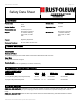
9. Physical and Chemical Properties
Appearance:
Liquid
Physical State:
Liquid
Odor:
Solvent Like N.E.
Odor Threshold:
Specific Gravity:
1.211
pH:
8.7
Freeze Point, °C:
N.D.
Viscosity:
N.D.
Solubility in Water:
Slight
Partition Coefficient, n-octanol/
water:
N.D.
Decomposition Temp., °C:
N.D.
Boiling Range, °C:
100 - 537
Explosive Limits, vol%:
0.9 - 24.6
Flammability:
Does not Support Combustion 94
Flash Point, °C:
Evaporation Rate:
Slower than Ether
Auto-Ignition Temp., °C:
N.D.
Vapor Density:
Heavier than Air
Vapor Pressure:
N.D.
(See "Other information" Section for abbreviation legend)
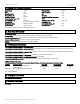
10. Stability and Reactivity
Conditions to Avoid: Avoid excess heat. Keep from freezing.
Incompatibility: Incompatible with strong oxidizing agents, strong acids and strong alkalies.
Hazardous Decomposition: When heated to decomposition, it emits acrid smoke and irritating fumes.
Hazardous Polymerization: Will not occur under normal conditions.
Stability: This product is stable under normal storage conditions.
11. Toxicological Information
EFFECTS OF OVEREXPOSURE - EYE CONTACT: Irritating, and may injure eye tissue if not removed promptly.
EFFECTS OF OVEREXPOSURE - SKIN CONTACT: Low hazard for usual industrial handling or commercial handling by trained
personnel.
EFFECTS OF OVEREXPOSURE - INHALATION: High gas, vapor, mist or dust concentrations may be harmful if inhaled. Avoid
breathing fumes, spray, vapors, or mist.
EFFECTS OF OVEREXPOSURE - INGESTION: Substance may be harmful if swallowed.
EFFECTS OF OVEREXPOSURE - CHRONIC HAZARDS: Contains carbon black. Chronic inflammation, lung fibrosis, and lung
tumors have been observed in some rats experimentally exposed for long periods of time to excessive concentrations of carbon black
and several insoluble fine dust particles. Tumors have not been observed in other animal species (i.e., mouse and hamster) under
similar circumstances and study conditions. Epidemiological studies of North American workers show no evidence of clinically
significant adverse health effects due to occupational exposure to carbon black.
Carbon black is listed as a Group 2B-"Possibly carcinogenic to humans" by IARC and is proposed to be listed as A4- "not classified
as a human carcinogen" by the American Conference of Governmental Industrial Hygienists. Significant exposure is not anticipated
during brush application or drying. Risk of overexposure depends on duration and level of exposure to dust from repeated sanding of
surfaces or spray mist and the actual concentration of carbon black in the formula.
PRIMARY ROUTE(S) OF ENTRY: Eye Contact, Ingestion, Inhalation, Skin Absorption, Skin Contact
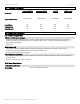
ACUTE TOXICITY VALUES
The acute effects of this product have not been tested. Data on individual components are tabulated below:
CAS-No. Chemical Name Oral LD50 Dermal LD50 Vapor LC50
112-34-5 2-(2-butoxyethoxy)ethanol 5660 mg/kg Rat 2700 mg/kg Rabbit N.E.
1336-21-6 Aqueous Ammonia 350 mg/kg Rat N.E. N.E.
84133-50-6 Secondary Alcohol Ethoxylate 2100 mg/kg Rat N.E. N.E.
1333-86-4 Carbon Black >15400 mg/kg Rat N.E. N.E.
3179-76-8 1-Propanamine, 3-(Diethoxymethylsilyl)- N.E. 2324 mg/kg Rabbit N.E.
34590-94-8 Dipropylene Glycol Monomethyl Ether 5350 mg/kg Rat 9500 mg/kg Rabbit >20 mg/L
540-97-6 Dodecamethylcyclohexasiloxane 50000 mg/kg Rat >2000 mg/kg Rat N.E.
Rust-Oleum Home Counter Top Deep Tint Base One Quart 6 Pack
Page 3 / 5