
Owner's Manual
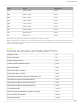

Table Of Contents
- PSM300 User Guide
- PSM300 Stereo Personal Monitor System Online User Guide
- Table of Contents
- PSM300Stereo Personal Monitor System
- Important Product Information
- PSM®300
- PSM®300
- Hardware
- System Applications
- System Setup and Configuration
- Operation
- Troubleshooting
- Specifications
- RF Carrier Range
- Compatible Frequencies
- Tuning Bandwidth
- Operating Range
- Audio Frequency Response
- Signal-To-Noise Ratio
- Total Harmonic Distortion
- Companding
- Spurious Rejection
- Latency
- Frequency Stability
- MPX Pilot Tone
- Modulation
- Operating Temperature
- RF Output Power
- RF Output Impedance
- Net Weight
- Dimensions
- Power Requirement
- Audio Input
- Connector Type
- Polarity
- Configuration
- Impedance
- Nominal Input Level
- Maximum Input Level
- Pin Assignments
- Phantom Power Protection
- Audio Output
- Connector Type
- Configuration
- Impedance
- Active RF Sensitivity
- Image Rejection
- Adjacent Channel Rejection
- Intermodulation Attenuation
- Blocking
- Audio Output Power
- Minimum Load Impedance
- Headphone Output
- Output Impedance
- Net Weight
- Dimensions
- Battery Life
- Frequency Range and Transmitter Output Power
- Optional Accessories and Replacement Parts
- Certifications
- PSM®300 Personal Monitor Wireless System Frequency Supplement
- PSM300 Personal Monitor System Product Info
- P3RA User Guide
- P3RA Professional Bodypack Receiver Safety Information
- SE215 Manual
- Rack Mount Hardware Kit Instruction Sheet
- AA Battery Insertion for Bodybacks
- A Quick Guide to Personal Monitor Systems
- Warranty
- Safety Precautions

Shure Incorporated
31/36
1.
2.
•
•
•
•
Canada Warning for Wireless
This device operates on a noprotection, nointerference basis. Should the user seek to obtain protection from other radio ser
vices operating in the same TV bands, a radio licence is required. For further details, consult Innovation, Science and Econom
ic Development Canada’s document Client Procedures Circular CPC2128, Voluntary Licensing of LicenceExempt LowPow
er Radio Apparatus in the TV Bands.
Ce dispositif fonctionne selon un régime de non‑brouillage et de non‑protection. Si l’utilisateur devait chercher à obtenir une
certaine protection contre d’autres services radio fonctionnant dans les mêmes bandes de télévision, une licence radio serait
requise. Pour en savoir plus, veuillez consulter la Circulaire des procédures concernant les clients CPC‑2‑1‑28, Délivrance de
licences sur une base volontaire pour les appareils radio de faible puissance exempts de licence et exploités dans les bandes
de télévision d’Innovation, Sciences et Développement économique Canada.
The antenna(s) must be installed such that a minimum separation distance of 20 cm is maintained between the radiator (anten
na) and all persons at all times.
La ou les antennes doivent être installées de telle façon qu'une distance de séparation minimum de 20 cm soit maintenue en
tre le radiateur (antenne) et toute personne à tout moment.
Important Product Information
LICENSING INFORMATION
Licensing: A ministerial license to operate this equipment may be required in certain areas. Consult your national authority for
possible requirements. Changes or modifications not expressly approved by Shure Incorporated could void your authority to
operate the equipment. Licensing of Shure wireless microphone equipment is the user’s responsibility, and licensability de
pends on the user’s classification and application, and on the selected frequency. Shure strongly urges the user to contact the
appropriate telecommunications authority concerning proper licensing, and before choosing and ordering frequencies.
Information to the user
This device complies with part 15 of the FCC Rules. Operation is subject to the following two conditions:
This device may not cause harmful interference.
This device must accept any interference received, including interference that may cause undesired operation.
Note: This equipment has been tested and found to comply with the limits for a Class B digital device, pursuant to part 15 of
the FCC Rules. These limits are designed to provide reasonable protection against harmful interference in a residential installa
tion. This equipment generates uses and can radiate radio frequency energy and, if not installed and used in accordance with
the instructions, may cause harmful interference to radio communications. However, there is no guarantee that interference will
not occur in a particular installation. If this equipment does cause harmful interference to radio or television reception, which
can be determined by turning the equipment off and on, the user is encouraged to try to correct the interference by one or more
of the following measures:
Reorient or relocate the receiving antenna.
Increase the separation between the equipment and the receiver.
Connect the equipment to an outlet on a circuit different from that to which the receiver is connected.
Consult the dealer or an experienced radio/TV technician for help.
Industry Canada ICES-003 Compliance Label: CAN ICES-3 (B)/NMB-3(B)
Note: EMC conformance testing is based on the use of supplied and recommended cable types. The use of other cable types may degrade EMC perfor
mance.
Changes or modifications not expressly approved by the manufacturer could void the user’s authority to operate the
equipment.
Please follow your regional recycling scheme for batteries, packaging, and electronic waste.