
Battery Communications Integration Guide


01 JUNE 2022 V 2.6 18
KiloVault HAB
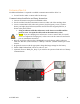
No additional hardware is required to establish communications with KiloVault HAB batteries.
• You will not need to make a custom cable for setup with a HAB V4, but a custom cable
is necessary for HAB V3 or older models.
Communications Installation and Setup Instructions
1. Ensure that the batteries are running the latest firmware from KiloVault and that the Sol-
Ark communication profile is selected.
a. If unsure, contact KiloVault to verify.
2. Set the DIP switches following the KiloVault manual.
a. If only using a single battery, all DIP switches should be “OFF.”
b. If using more than one battery, the battery connected to the inverter should have
only DIP switch one (1) turned “ON.” Set DIP switches of all subsequent batteries
according to what number they are in the chain (the DIP switches represent the
binary number of the battery).
c. A theoretical maximum of 15 batteries can be communicating in parallel at the
same time. More than one unit still untested but should work.
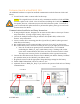
3. (HAB V3 or older only) Create a custom cable such that the “Inverter RS485B” wire
connects to pin 1 (white- orange) and “Inverter RS485A” connects to pin 2 (solid
orange).
4. Connect the custom 6-pin connector to the KiloVault’s custom port and connect the
custom RJ45 cable to the “Battery CAN Bus” (outdoor units) or “RS-485” (indoor units)
port on the inverter.
5. Program the inverter with the appropriate charge/discharge settings for this battery.
6. Enable “BMS Lithium Batt” and set its value to “05”.
7. (Optional) Turn on “BMS_Err_Stop” if you wish for the system to fault on loss of battery
communications (This may happen more frequently since the KiloVault HAB batteries
do not feature ground connections).
Inverter
Port