
User Guide


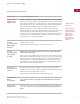

DEHYDRATION TIPS
Dehydration racks can be purchased at a
hardware or discount store.
Select a convection setting of 150˚F (65˚C)
a
nd stack the dehydration racks in the oven,
as many as will fit.
Refer to the following dehydration times
or consult a food preservation book for
specific times and handling of various
foods.
DEHYDRATION TIMES
Apples, Kiwi, Oranges, Pears and
Strawberries –
Convection baking time:
6 to 8 hours
Tomatoes –
Convection baking time:
6 to 8 hours
Total dehydration times depend on the thick-
ness of the slices and the amount of pulp to
seeds and juice.
23
WOLF GAS RANGE OVEN OPERATION
Dimensions in parentheses are in
millimeters unless otherwise specified.
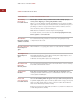
ROASTING TIPS
Refer to the Convection Roasting Guide on
page 31. The suggested cooking times are
b
ased on using a preheated oven.
C
onvection roasting is recommended for
most meats because of the beautiful
browning on the outside while the juices
a
re retained on the inside.
Roast tender cuts of meat using the convec-
tion setting. Always use a roasting rack in
an open, low-sided pan.
Cook less tender cuts, such as pot roasts,
using the standard setting. Cover with
aluminum foil while cooking or use a
covered pan.
The lower half of the broiler pan can be
used as an open roaster.
Use an instant-read, portable meat ther-
mometer to check the internal doneness.
When checking the internal temperature,
remove the roast when the thermometer
reads 10 degrees below the doneness
temperature.
Before slicing a roast, let it stand for 10 to
15 minutes. Keep it warm by covering it
loosely with aluminum foil while standing.
Foods must be dried to below .60 water
activity or dr
y to the touch to be safely
stored with no danger of mold, yeasts or
bacteria growing. When in doubt, dehy-
drate for the maximum time specified.