
Specifications




64
64 • Von Duprin 98/99 Series
Mechanical options & accessories
98/99 Mechanical options
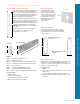
AX Accessible device
The AX device is a UL certified exit device designed to meet the
progressive requirements of the California Building Code for
accessible openings. This device meets the 5 lbs of operating
force requirement called for in chapter 11B-309.4. The AX device
also exceeds ANSI/BHMA requirements. Available devices
include: AX98/99, AX98/99-F, AX98/9949LBL, AX98/9949-F
LBL, AX98/9949-F LBLAFL. Additionally, all AX devices will be
shipped with a new UL label clearly stating “Meets California
building Code (2013) Sec. 11B-309.4” and an “AX” identifier label
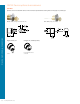
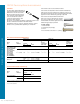
on device center case. See images below for reference.
XP Extra performance
For increased security the
XP98/99 Rim exit device has
a static load force resistance
of more than 2,000 pounds,
twice that of standard rim exit
devices. The two-piece latch
bolt forms a 90
°
latch-to-
strike contact. The “smart” latch changes shape when subjected
to external forces. This design enables the exit door to withstand
an external attack and remain secure. Additionally, the patented
latch bolt design provides a greater, longer-lasting latch bolt to
strike contact which is not easily affected by the twisting motion
of a weakened frame, resulting in an opening that will remain
strong.
With a door loaded to 250 pounds, XP98/99 requires less than
40 pounds of pressure to open, 25% less than the safety code
requires.
XP98/99 is available for panic or fire exit hardware applications.
Dimensions, finishes and trim options are equal to the standard
98/99 series rim exit device.
Note: The 909 strike is to be used for all applications.
The exception occurs with the use of fire rated double door applications, in this instance
the 954 strike is required.
WS Surface vertical rod one-point
and three-point exit devices
WS Multi-point exit devices for tornado application devices
WS98/9927 (one- point) and WS98/9957 (three-point) surface
vertical rod exit devices are designed, tested and certified to
comply with the Federal Emergency Management Agency's
publication FEMA 361- Design and Construction Guidance for
Community Safe Rooms.
UL Listing – panic hardware UL 305; and fire exit hardware UL 10C:
WS98/9927:
3 hour pairs of doors double egress, 90 minutes
swinging same direction, 8'0" x 8'0" BHMA Grade 1,
ANSI A156.3-2001
WS98/9957:
3 hours single doors, 4'0" x 8'0" BHMA Grade 1,
ANSI A156.3-2001
Windstorm ratings:
WS98/9927:
Miami-Dade County/FBC compliance to TAS
201, TAS 202, TAS 203; design load rating +150/-150 PSF
(245 MPH wind zone); Enhanced Hurricane Protection
(EHPA) ASTM E1996, ANSI/ICC 500 (245 MPH wind
zone).
UL-FEMA 361 certified 8'0" x 8'0" pairs, swinging same
direction and 4'0" x 8'0" single non-fire rated flush
hollow metal. UL-ANSI/ICC 500 certified for F5 tornado
applications.
WS98/9957:
UL-FEMA 361 certified 4'0" x 8'0" single flush hollow
metal (fire-rated and panic). UL-ANSI/ICC 500 certified
for F5 tornado applications.
These devices are listed with Steelcra Paladin
™
PW-Series doors
for tornados, and Steelcra H-Series doors hurricane applications.
To order, specify: WS prefix, example WS9927-F
LBR Less bottom rod, panic and fire rated
LBR option is available, using a spring loaded auxiliary latch bolt
installed in the lower door edge. When exposed to heat the
auxiliary latch bolt releases, keeping the doors in alignment and
closed during a fire. UL listed 3 hours on hollow metal doors double
egress, 90 minute swinging same direction, and 20 minutes wood
doors (consult wood door manufacturer). Fits door stiles as narrow
as 3
5
/8".
LBR devices must be ordered in pairs or must be used in
conjunction with an approved automatic or constant latching
flush bolt.
PL Pullman latch
When PL is specified the standard latches are replaced with
pullman style latches. Pullman latches are always extended and
are most commonly used in conjunction with electric strikes and
LBR-less bottom rod application. Not available with Fire rated
devices.
Not recommended where security is of the utmost importance since latches do not
deadlock.