
Installation manual



STARTING/STOPPING
PROCEDURE
THE
STARTING
SYSTEM
These marine diesel engine have
l2V
DC electric starters. The
start circuitry
is
designed so that the PREHEAT button must
be depressed for the time specified in the preheat chart. Then,
while keeping the
PREHEAT button engaged, the START
button
is
depressed to crank the engine.
Starting
Procedure
1. Place the transmission
in
neutral and advance the throttle
control to slightly open.
A
CAUTION:
Make
certain
the
transmission
is
in
neutral.
Starting
in
gear
could
result
in
serious
damage
to
your
transmission,
your
boat,
and
vessels
nearby.
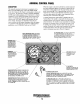
2. Turn the KEY SWITCH to the
ON
position (2 o'clock).
3. Depress the
PREHEAT switch. The voltmeter, panel
lights, gauges, meters and fuel solenoid will be activated.
The
PREHEAT switch should be depressed
in
accordance
with the following chart:
TemperatureJPreheat
Atmospheric
Temperature
Preheating
TIme
41°F(5°C)
or
higher
Approx.
5
seconds
41°F(5°C)
to
23°F
(-5°C)
Approx.
10
seconds
23°F(-5°C)
or
lower
Approx.
15
seconds
NOTE:
The START button will
not
energize unless the PRE-
HEAT
button
is
depressed. Depressing the PREHEAT button
activates the glow plugs in the cylinder head so use the PRE-
HEAT
intem!ittently to avoid overheating the glow plugs.
4. While still depressing the
PREHEAT switch, depress the
START switch. This will engage the starter solenoid.
Upon engine starting, release the START switch and
release the
PREHEAT switch.
NOTE:
When starting:
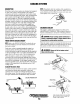
A voltage drop will occur
when the preheat button
is
depressed.
12
I
14
~6
\
",
~
'I,
L....J
\:i
VOLTS
5. Should the engine not start when the START button
is
depressed for 10 to 20 seconds, release both buttons and
wait
30 seconds; repeat the procedure above and preheat
longer. Never
run
the
starter
for
more
than
30
seconds.
A
CAUTION:
Prolonged
cranking
Intervals
wfthout
the
engine
starting
can
result
in
the
engine
exhaust
system
filling
wfth
raw
water.
This
may
happen
because
the
pump
Is
pumping
raw
water
through
the
raw
water
cooling
system
during
cranking.
This
raw
water
can
enter
the
engine's
cylinders
by
way
of
the
exhaust
manifold
once
the
exhaust
system
fills.
Prevent
this
from
happening
by
closing
the
raw
water
supply
through-hull
shutoff,
draining
the
exhaust
muffler,
and
correcting
the
cause
of
the
excessive
engine
cranking.
Engine
damage
resulting
from
raw
water
entry
is not a
warrantable
issue;
the
owner/operator
should
keep
this
in
mind.
6. Once the engine starts, check the instruments for proper
oil pressure and battery charging voltage.
NOTE:
Never attempt to engage the starter while the
engine is running.
Starting
Under
Cold
Conditions
Make sure the lubricating oil
is
appropriate for the prevailing
temperature. Use oil with
an
API Specification
of
CF
or
CG-4,
SAE
30. lOW-30, or 15W-40, or 20W-40.
The battery should be fully charged to minimize voltage drop.
Use a sufficient amount
of
preheat to aid in starting. See the
Temperature/Preheat chart elsewhere in this section.
Stopping
Procedure
To
stop the engine, bring the throttle to an idle position and
place the transmission
in
neutral. Allow the engine to idle for
a
few
moments to stabilize temperatures. Turn the engine off
using the stop control cable.
NOTE:
Make certain this key switch is in the
OFF
position
(12 o'clock).
If
the key switch is left
ON,
the battery will
discharge.
An
engine alarm buzzer is provided to warn the
operator
of
this condition (key switch ON). The best method
of
preventing the battery from discharging is to remove the
key from the key switch after stopping the engine.
ALTERNATOR
WARNINGS
The Admiral Control Panel uses a voltmeter to monitor the
performance
of
the alternator.
COOLANT
TEMPERATURE
SWITCH
A coolant temperature switch
is
located on the thermostat
housing. This switch will activate a continuous alarm
if
the
coolant's operating temperature reaches approximately 210°F
(99°C).
Engines & Generators
8