
User's Manual

MPR series User’s Manual: Draft version 0.95 11/4/04 page 24
In discussing antennas, it is often convenient to speak of an isotropic antenna that radiates power equally in
all directions, but no such antenna actually exists. Real antennas always transmit more effectively in some
directions than others. The ratio of the power density in the direction of highest power to the average
power radiated in all directions is the maximum directive gain, often simply referred to as the gain of the
antenna. It is important to note that antennas are passive devices and don’t actually add any power to the
signal provided by the reader: gain in this context refers to the increased power received by a device in the
best direction relative to the average of all directions. Gain varies tremendously for different antenna
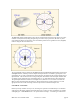
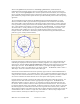
designs. A very common antenna, the dipole antenna, is fairly close to an isotropic radiator: the dipole
sends no radiation along its axis, but transmits equally in all directions perpendicular to the axis and nearly
as well to directions at more than a few degrees away from the axis. The gain of a dipole antenna – the ratio
of the power density along the direction of maximum radiated power to the average of all directions – is
only about 1.7:1 or 2.3 dB
1
. Note that gain is often reported as ‘dBi’, the ‘i’ denoting the use of an ideal
isotropic antenna as the reference. A dipole antenna is a good choice when all tags in any direction along a
plane are to be read. Radiation from a dipole is polarized along the axis of the dipole; thus, a tag whose
antenna is also a dipole should be oriented in the same direction as the reader antenna in order to be read
effectively.
1
dB = deciBel is a method of logarithmically describing the ratio of two power levels; P
21
(dB) = 10 log
10
(P
2
/P
1
). Thus 10 dB represents a factor of 10 in power.