
User's Manual

MPR series User’s Manual: Draft version 0.95 11/4/04 page 25
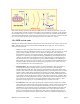
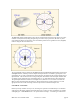
The MPR5000 integral antenna behaves like a dipole oriented parallel to the short edge of the card. Thus,
radiation is mainly forward (looking along the long axis of the card), up, and down, but with very little
power radiated to the left or right of the card. The radiation pattern can be regarded as a torus (doughnut)
with axis along the short side of the card.
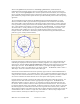
The recommended isotropic antenna for the MPR6000/7000, the MAXRAD [model number for PN1789] is
a monopole antenna, essentially a half of a dipole antenna placed above a conductive ground plane. The
ground plane acts to create a reflected image of the monopole; the monopole and its image together form a
dipole antenna. Thus for directions above the ground plane, the radiation of the monopole resembles that
of a dipole, but for sufficiently large ground planes there is very little radiation below the ground plane.
The ground plane should be at least 2-3 wavelengths across (about 60 cm or 25 inches on a side at 900
MHz) to ensure minimal bottom-side radiation. Monopole antennas are compact and easy to use, and
appropriate when one wishes to find tags located in any direction around the monopole axis.
PATTERN IF AVAILABLE
Relatively isotropic antennas are easy to use, but if tags are expected to be found mainly in one direction
with respect to the antenna, radiation in the other directions is wasted. In such circumstances, an antenna
with higher gain – a directional antenna – will provide better read range. A common type of directional