
User's Manual
MPR series User’s Manual: Draft version 0.95 11/4/04 page 29
record some or all of the tags. A successful RFID implementation requires the integration of appropriate
procedures for human workers to follow in placing and using tags and objects carrying them, careful
installation of reader hardware, and the right middleware to convert the raw data from the reader into
information useful for operating the business.
Procedures are intimately connected with the planned usage for the RFID tags. Are the tags attached to
individual items, boxes, or a pallet or other large container? Are the items to be inventoried on a shelf,
counted as they move along a conveyorized transport belt, or tracked through a door? Can the orientation
of objects to be read be controlled or must the reader account for randomly-oriented tags, and does this
include tags placed end-on to the reader? What is the desired read range? Do the objects to be labeled
contain metals or aqueous fluids, and if so can the tags be placed sufficiently far from these disturbing
influences to be read? Is the necessary read reliability 90%, 99%, or 99.9%? Given the answers to such
questions, the implementer can then develop procedures to ensure that the desired reliability is achieved.
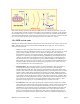
As might be inferred from the discussion in section 1.5.3.2, selection and placement of reader antennas is a
critical consideration for a successful installation. The MPR6000/7000 can be connected to two external
antennas; these antennas should be configured to reliably cover the region over which tags are to be read.
For example, at a doorway, one directional antenna may be placed < 1 meter (3 feet) from the ground and
the other around 2 meters (6 feet) high, thus providing good coverage of the whole door area. When many
readers are used in close proximity, consideration should be given to minimizing interference between
readers; for example, configurations in which one reader antenna looks directly at a neighboring reader’s
antenna should be avoided. It may be useful to provide reflective or absorbtive shielding between reader
installations.
The lower levels of middleware, dealing directly with the reader population, must incorporate very specific
knowledge about the use procedures and environment in which the tags are being read, and are likely to be
highly customized for each application. This software must provide filtering and aggregation capabilities
to ensure that the data that is forwarded to the enterprise information systems is correctly categorized and
representative of what is happening to the physical inventory of objects being tracked. Once this has been
accomplished, the integration of a properly filtered and aggregated dataset with a standard enterprise
resource planning package such as those available from vendors like Oracle or SAP is a reasonably well-
established function, with the necessary customization provided by a large number of third-party vendors.
1.5.4 RFID standards
Bar codes for commercial products are standardized worldwide under the auspices of the Uniform Code
Council and EAN International. In September of 2003, these organizations joined with the AutoID Labs
headquartered at the Massachusetts Institute of Technology to form EPC Global Inc., chartered with the
standardization of a generalization of the bar code system, the Electronic Product Code (EPC), as well as
the creation of software and hardware standards to support the use of RFID systems in implementing
identification of objects by means of EPC’s. This work is intended to complement existing and ongoing
activities at the International Standards Organization (ISO), where many standards for the operation of
LF and HF RFID systems have already been defined.
1.5.4.1 EPC Global
EPC Global is creating a set of standards intended to provide a robust infrastructure for the proliferation of
RFID technology:
• EPC Tag data: the standards define various formats for the unique identifier (EPC) for each tag, to
be consistent with existing EAN/UCC standards: serialized version of the EAN.UCC Global Trade
Item Number (GTIN®), the EAN.UCC Serial Shipping Container Code (SSCC®), the EAN.UCC
Global Location Number (GLN®), the EAN.UCC Global Returnable Asset Identifier (GRAI®),
the EAN.UCC Global Individual Asset Identifier (GIAI®), and a General Identifier (GID).